Post-Bid Evaluation
After a tender is decided, close the loop. Recording outcomes and completing a bid debrief helps your team learn — and trains MedStrato’s AI to score future opportunities more accurately.
Scenario: A bid team learns they lost a hospital tender on pricing. The manager moves the tender to Lost, fills in the debrief with specific pricing feedback from the buyer, and notes what to change next time. Six months later, MedStrato’s opportunity scoring flags a similar tender — this time with a pricing risk warning informed by the earlier debrief.
Update the tender stage
Open the tender and click Move to to set the outcome:
| Stage | When to use |
|---|
| Evaluating | Under evaluation by the buyer |
| Preparing | Bid preparation in progress |
| Quoting | Finalizing pricing |
| Submitted | Proposal sent to the buyer |
| Pending Result | Awaiting the buyer’s decision |
| Won | Tender awarded to your team |
| Lost | Tender awarded to a competitor |
| Cancelled | Tender withdrawn or cancelled |
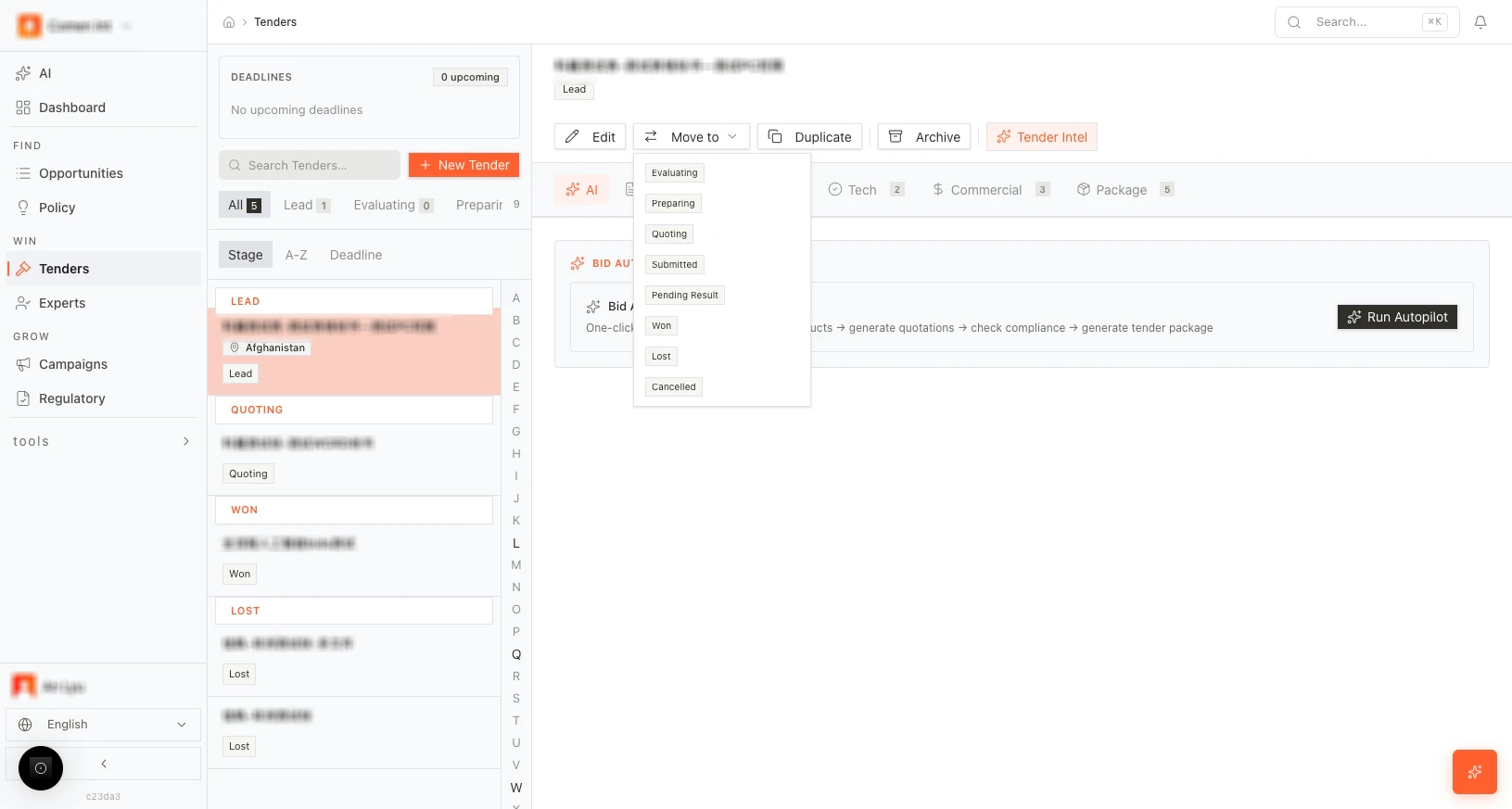 Changing the stage updates the pipeline view, Dashboard funnel, and list filters.
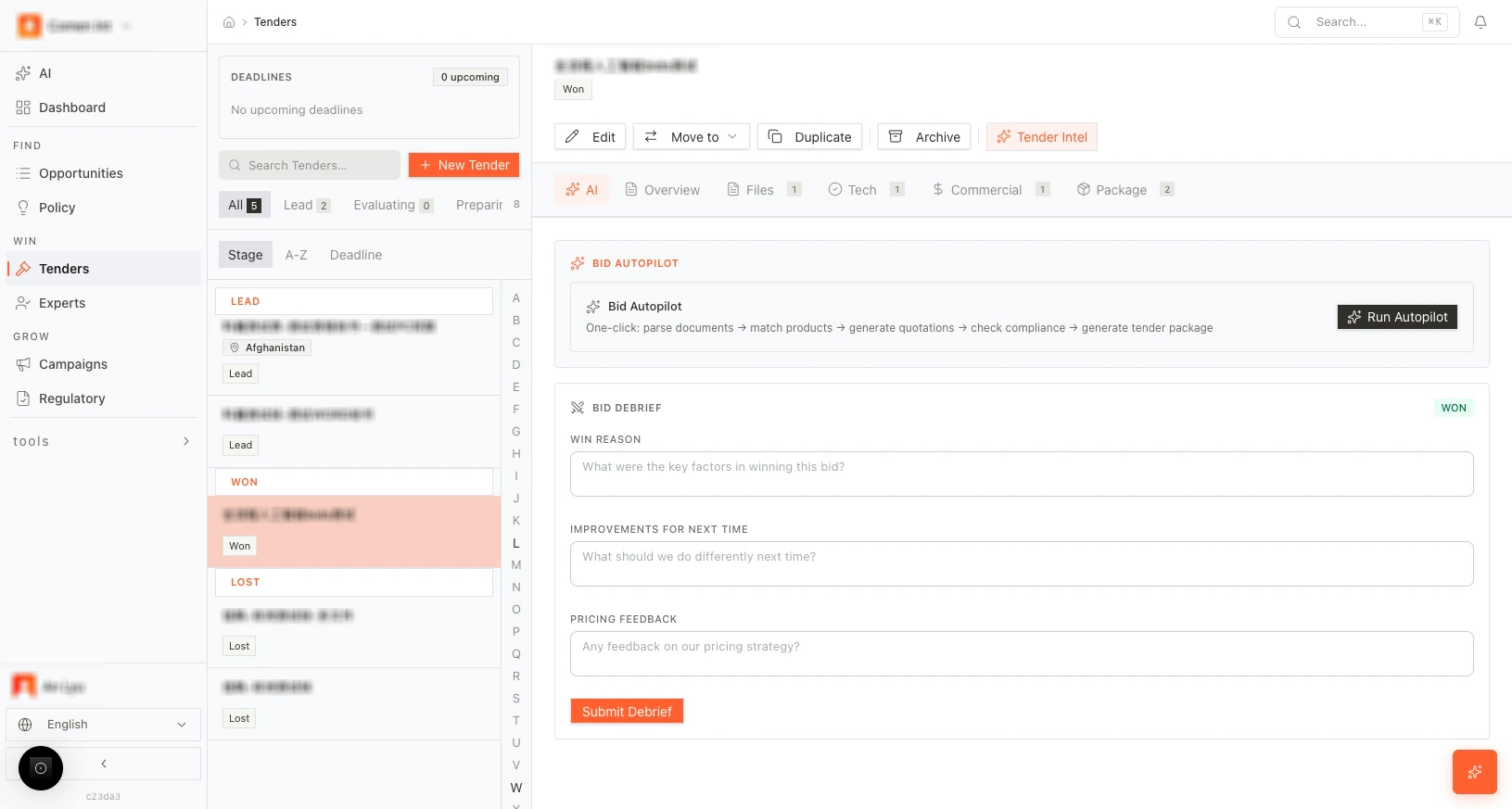
Bid Debrief — Won
When you move a tender to Won, the Bid Debrief section appears (under the AI tab):
- Win Reason (required) — What were the key factors? Describe differentiators, pricing strengths, or relationship advantages.
- Improvements for Next Time (optional) — Process or content improvements for future bids.
- Pricing Feedback (optional) — Any feedback from the buyer on your pricing.
Click Submit Debrief to save.
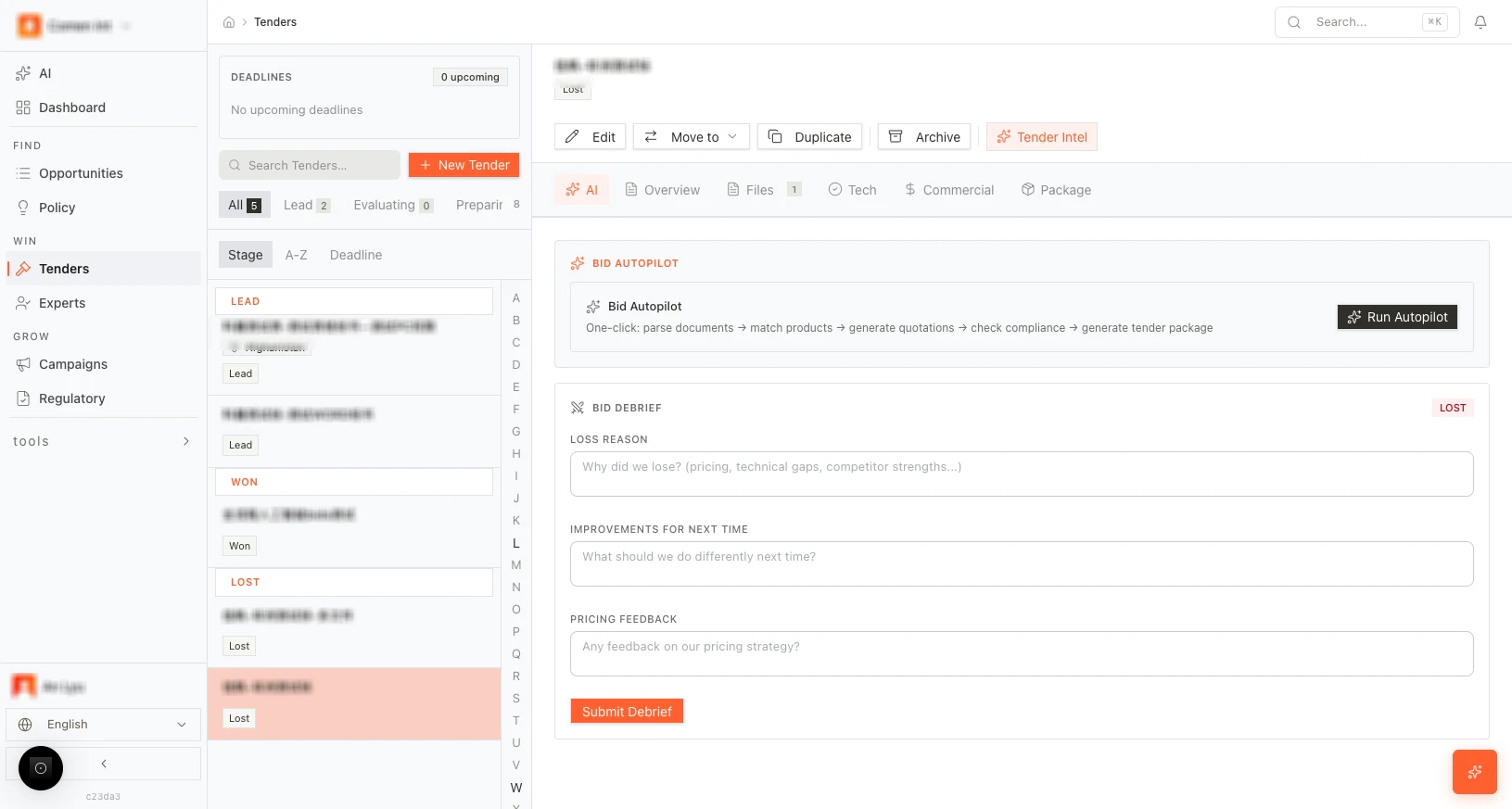
Bid Debrief — Lost
When you move a tender to Lost, fill in:
- Loss Reason (required) — Why you lost. Be specific: pricing, technical gaps, competitor strengths, timing, or relationship factors.
- Improvements for Next Time (optional) — What to do differently.
- Pricing Feedback (optional) — Buyer feedback on pricing.
Click Submit Debrief to save.
How debriefs improve future bids
Debrief data feeds back into MedStrato’s AI:
- Opportunity scoring — future opportunities are scored with patterns from past wins and losses.
- Bid strategy — recurring loss reasons surface as risk warnings on similar tenders.
- Dashboard analytics — win rate, conversion funnel, and pipeline metrics stay accurate.
More scenarios
Pattern recognition: After six months of consistent debriefs, a sales director notices MedStrato’s opportunity scoring now flags tenders from a specific hospital group as “high risk — pricing sensitive.” The team adjusts their pricing strategy for that buyer and wins the next round.
Team learning: A bid manager exports debrief data for a quarterly review. The data shows that 60% of losses cite “incomplete technical response” as a factor. The team implements a policy of always running AI compliance checks before submission — and their win rate improves by 15% the following quarter.
The more detailed your loss reasons, the better the AI learns. “Lost on price” is useful; “Lost because competitor offered 15% lower on consumables” is much more valuable.

